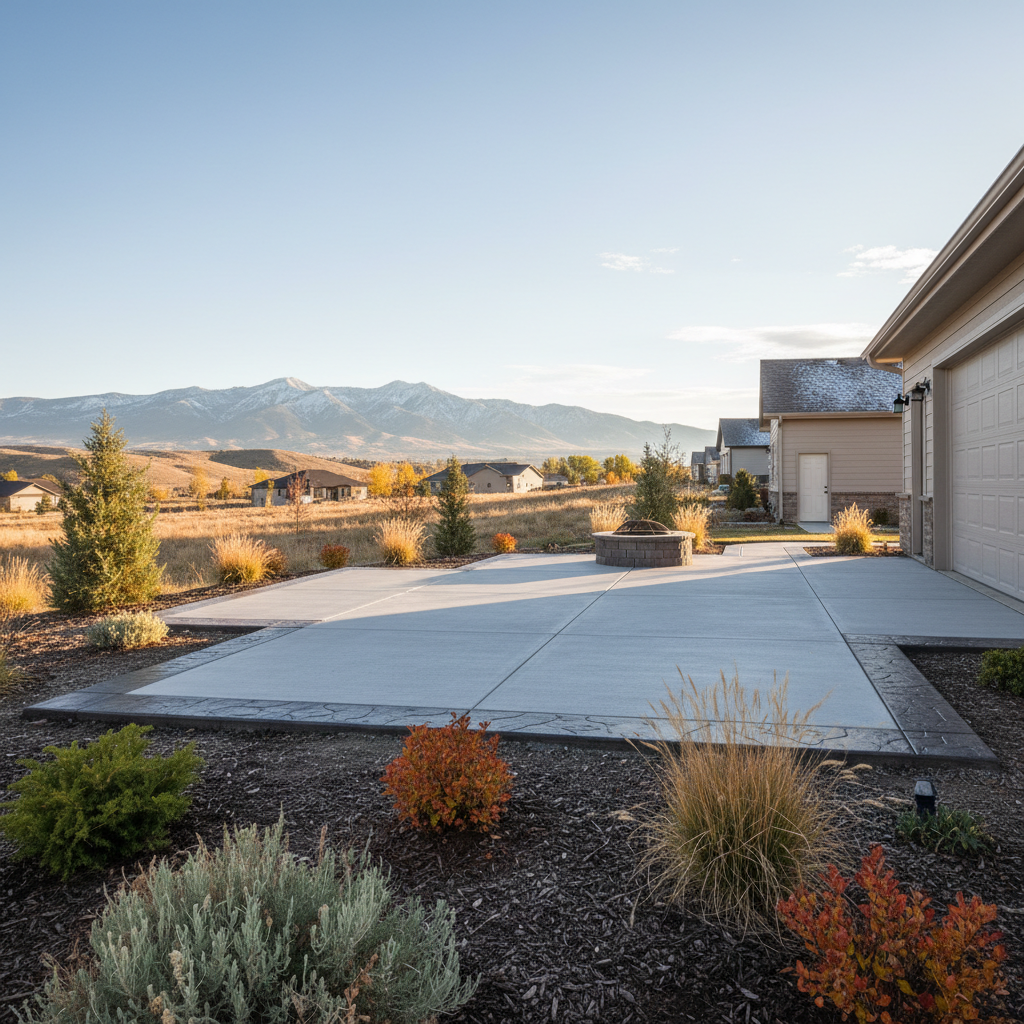
You're ready for new concrete, but when's the best time to get it done here in Ogden? It's not just about when you've got the cash or the free weekend. The weather plays a huge role in how your concrete cures and how long it lasts. We've got some pretty wild temperature swings in Northern Utah, and that directly impacts concrete work.
The Best Time to Pour Concrete in Ogden
Honestly, spring and fall are your sweet spots. Think late April through June, and then September through October. Why those times? They usually offer the most consistent temperatures. Concrete needs time to cure properly, and that process is highly sensitive to heat and cold.
When it's too hot, like in the middle of July or August, the water in the mix evaporates too fast. This can lead to cracking, a weaker surface, and a finish that's harder to work with. We can still pour in the summer, but it requires more precautions like using retarders in the mix, keeping the slab wet, and sometimes pouring in the early morning hours to beat the heat. It's more of a challenge, and you want your concrete to have the best possible start.
Then there's winter. Pouring concrete when temperatures are consistently below 40 degrees Fahrenheit is a big no-no. The water in the mix can freeze before the concrete has a chance to gain strength, leading to serious damage like scaling and spalling. If you absolutely have to pour in winter, it involves heating the aggregate and water, using accelerators, and then covering the slab with insulated blankets for days. It adds a lot to the cost and complexity, and frankly, it's usually best to just wait.
Weather Conditions That Matter
Beyond just temperature, there are a few other things we look at. Wind, for example. A really windy day, even if it's not super hot, can dry out the surface of the concrete too quickly, leading to plastic shrinkage cracking. Rain is another obvious one. You don't want rain on fresh concrete. It can wash out the cement paste, weaken the surface, and leave an ugly finish. We always keep a close eye on the forecast, and sometimes, you just have to reschedule.
Humidity also plays a part. Moderate humidity helps slow down the drying process, which is good for curing. Here in Ogden, especially up near the foothills where the soil can be a bit clay-heavy, we also have to consider ground moisture and proper sub-base preparation. You don't want water migrating up into your slab.
Protecting Your Concrete Investment Year-Round
Okay, so you've got your beautiful new driveway or patio. Now what? You want it to last, right? Here's how you protect it, especially with our Ogden winters:
- Curing is Key: After we pour, we'll talk about proper curing. This usually involves keeping the concrete moist for several days, sometimes with a curing compound or by misting it. Don't skip this step; it's crucial for strength and durability.
- Seal It Up: I can't stress this enough. Once your concrete has fully cured (usually 28 days), apply a good quality concrete sealer. This is your first line of defense against water penetration, freeze-thaw cycles, and stains. You should plan on resealing every 2-5 years, depending on the sealer type and traffic.
- Avoid De-icing Salts: This is a big one for our area. Many de-icing salts, especially those containing ammonium nitrates or sulfates, are incredibly damaging to concrete. They can cause spalling and surface deterioration. If you need to melt ice, use sand for traction or a concrete-safe de-icer (look for products containing calcium chloride or potassium chloride, but even these should be used sparingly). Shoveling promptly is always the best bet.
- Clean Regularly: Sweep off dirt and debris. If you spill something like oil or grease, clean it up quickly. The longer it sits, the harder it is to remove and the more likely it is to stain.
- Watch for Cracks: Concrete cracks. It's a fact of life. Small hairline cracks are often nothing to worry about. But if you see larger, widening cracks, or significant settling, it's worth having us take a look. Sometimes, sealing these cracks can prevent water from getting in and causing bigger problems, especially with our freeze-thaw cycles.
Taking a little care goes a long way. At Sunrise Concrete, we want your investment to look good and last for decades. If you've got questions about timing or maintenance, just give us a call. We're happy to talk you through it.